Builder's Risk Insurance for framing contractors
Course-of-construction coverage for the building you're framing — lumber packages, installed materials, and labor — against fire, wind, theft, and vandalism while the project is open to loss.
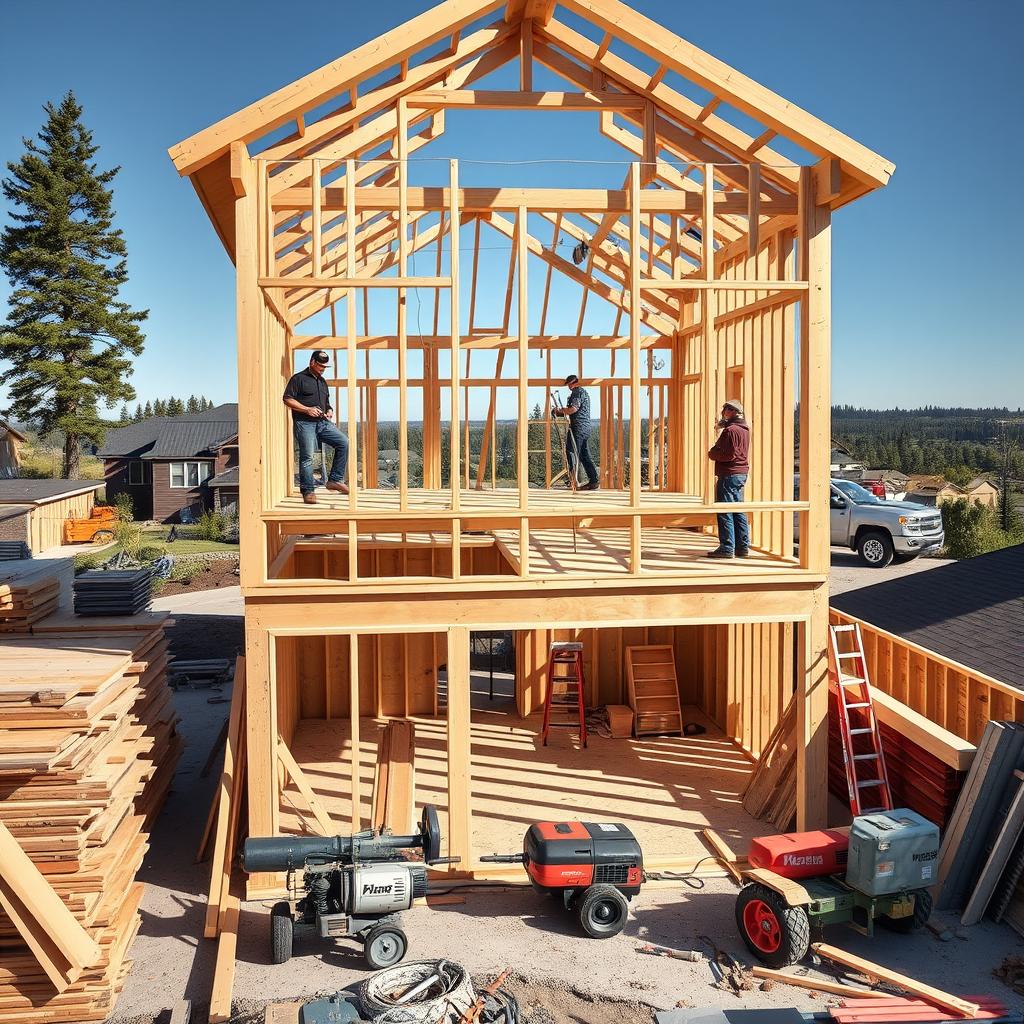
What it covers
- Lumber packages and framing materials on site
- Installed framing, sheathing, and labor in place
- Fire, wind, theft, and vandalism during construction
- Soft costs and delayed opening (optional)
- Materials in transit and at staging areas
- Scaffolding, temporary structures, and forms
Who it’s for
- Framers responsible for the materials they install
- Contractors whose GC's master policy leaves gaps
- Owners and builders on custom or spec homes
- Crews framing in wildfire, wind, or high-theft areas
Why CCA
- Closes the gap between delivered materials and installed work
- Written for the project's real value and construction timeline
- Covers the exposures GC master policies often miss
Common questions about builder's risk insurance
Builder's risk (course of construction) covers the structure and materials during construction — fire, wind, theft, vandalism, and some weather damage to the lumber package and installed framing. It protects the value of what you're building while it's most exposed.
Not always, but gaps are common. The GC's master policy may not cover materials you've delivered but not yet installed, or may carry a large deductible that falls on you. We review the GC's program and add an installation floater if there's a gap.
Yes — theft of materials from the site is a covered cause of loss under most builder's risk forms, subject to the policy terms and deductible. Given how common lumber theft is, this is one of the most valuable parts of the coverage.
It varies by contract. Often the owner or GC carries a master policy. When you're responsible for materials and labor you've put in place, an installation floater or your own builder's risk makes sure you're protected regardless of what the GC carries.
Most forms cover wind and weather damage to the structure under construction, though named-storm and hurricane coverage may carry separate deductibles in coastal zones. We structure the policy for your region's weather exposure.
Soft costs are the additional expenses from a construction delay — extra interest, real estate taxes, rent, and re-engineering. Soft-cost coverage is optional but valuable on larger projects where a fire or storm could push back completion.
The limit should equal the completed value of the project (materials, labor, and profit) at the time of loss. We help you set the limit correctly so the structure is fully insured throughout the build.
Yes. Fire is a covered peril, and a framed structure full of combustible lumber is exactly when the exposure peaks. Builder's risk covers fire damage to the structure and materials during construction.
Most framers pay $1,500–$4,500 a year for $1M/$2M general liability, with workers' comp rated on payroll at class 5403 and tools floaters based on scheduled gear. We quote the full program in about 15 minutes and show every market's price.
Yes. Contractors Choice Agency is licensed in all 50 states and writes framing crews from the Sun Belt and Texas to the Pacific Northwest, Rocky Mountain West, and Northeast.
About 15 minutes for a standard program. Once bound, we turn around additional-insured certificates, waivers of subrogation, and primary/non-contributory endorsements usually within minutes.
Wood framing and rough carpentry is typically coded under NCCI class 5403 (Carpentry). Correct classification keeps you from overpaying or facing an audit surprise — and ensures claims aren't denied for misclassification.
We place general liability that specifically covers two- and three-story framing, truss setting, and roof work. Many budget contractor policies exclude work above one or two stories — we make sure yours does not.
Tools are covered under a tools & equipment (inland marine) policy, not GL or property. We schedule nail guns, saws, generators, and compressors at replacement cost so jobsite and truck theft is covered.
Most residential framers carry $1M/$2M GL with a $2M–$5M umbrella. Commercial and multifamily GCs often require $2M–$5M limits plus additional-insured status. We size limits to your actual contract requirements.
Yes — personal auto excludes business use and will deny claims when you haul lumber or tools. Commercial auto covers your trucks, trailers, and lumber haulers, including hired/non-owned vehicles.
Often, yes. We have excess-and-surplus (E&S) markets for contractors with loss runs, cancellations, or tough exposures that standard markets decline.
Your GL doesn't cover independent subs — they should carry their own and name you additional insured. We set up certificate tracking and additional-insured requirements so subcontracted work doesn't become your liability.
You reach a person with context, not a queue. We respond within 2 hours, help you document the loss, and manage the claim with the carrier so it's paid correctly and your operation keeps moving.
Framing has fall, nail-gun, saw, and theft exposures that generic carriers exclude or misprice. A specialty broker knows the class codes, the height exclusions to avoid, the markets that write framers, and how to manage a framing claim.
Pair it with related coverage
Ready to protect your framing operation?
Get a 15-minute quote from specialists who understand framing — GL, workers' comp, builder's risk, tools, and auto.