General Liability Insurance for framing contractors
Third-party bodily injury and property damage protection for your framing crews, jobsites, and subcontracted work — including products-completed operations and the additional-insured certificates that get you onto the project.
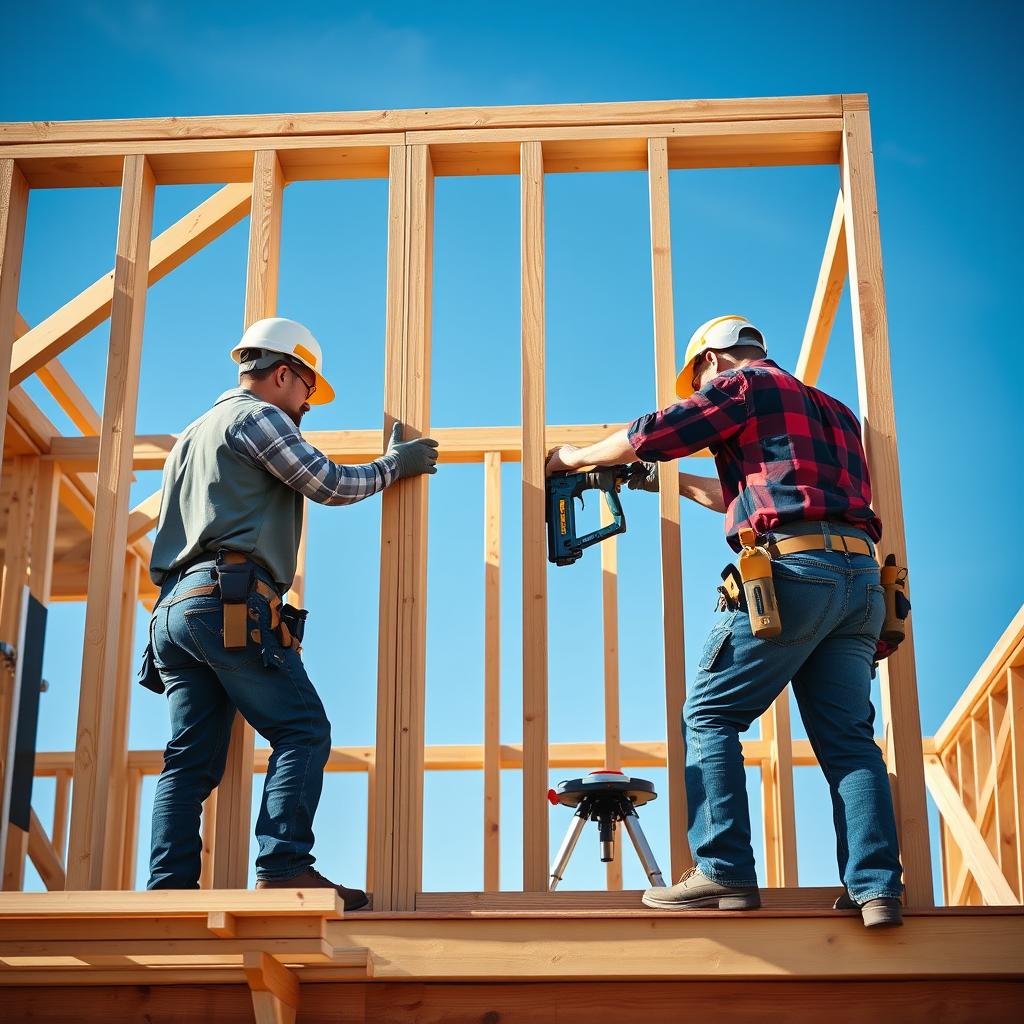
What it covers
- Bodily injury to visitors, other trades, and the public on your jobsite
- Property damage caused by your framing operations or subcontracted work
- Products-completed operations for framing you've finished
- Defense costs and legal fees when you're named in a lawsuit
- Additional-insured status for the GCs and developers you frame for
- Fire damage to property you're working on (with proper limits)
Who it’s for
- Residential framing contractors and rough carpentry crews
- Commercial and multifamily framing subcontractors
- Crews that frame over two stories or set roof trusses
- Framers who subcontract portions of their work
- Any framer whose GC requires additional-insured certificates
Why CCA
- GL placed WITHOUT the height exclusions that haunt budget policies
- Additional-insured and waiver-of-subrogation endorsements issued fast
- Limits scaled to what your commercial contracts actually require
Common questions about general liability insurance
GL covers third-party bodily injury and property damage caused by your framing operations — a visitor hurt on your jobsite, damage you cause to adjacent property, or a completed-operations claim after the frame is up. It does not cover your own injuries (that's workers' comp) or your own tools (that's a tools floater).
It should. Many low-cost contractor policies exclude work over one or two stories or exclude roof work entirely. Because framing is a height trade, we place GL that specifically covers two- and three-story framing, truss setting, and roof work.
GL covers third parties (other people and their property). Workers' comp covers your own employees if they're hurt on the job. You need both — GCs require GL certificates, and state law requires workers' comp for your W-2 crew.
Additional-insured status extends your GL to the GC for your operations, so if a claim arises from your framing work your policy responds first. It's a standard contract requirement, along with a waiver of subrogation and primary/non-contributory language. We issue these routinely.
Partially. GL typically includes limited coverage for fire damage to property in your care (often a $50,000 or $100,000 sublimit), but the structure itself should be covered under builder's risk. We coordinate both so the frame is protected during construction.
No. Independent subcontractors need their own GL and should name you additional insured. If an uninsured sub causes a loss, you can be pulled in. We help set up certificate tracking so subcontracted work doesn't become your liability.
Most residential framers carry $1M per occurrence / $2M general aggregate. Commercial and multifamily GCs often require $2M or $5M limits — we add an umbrella to reach them when needed.
GL for contractors is usually rated on payroll and subcontractor cost, sometimes on revenue. Accurate classification and documented loss control keep the premium fair. We document your real operation so you're not rated on a worst-case guess.
Most framers pay $1,500–$4,500 a year for $1M/$2M general liability, with workers' comp rated on payroll at class 5403 and tools floaters based on scheduled gear. We quote the full program in about 15 minutes and show every market's price.
Yes. Contractors Choice Agency is licensed in all 50 states and writes framing crews from the Sun Belt and Texas to the Pacific Northwest, Rocky Mountain West, and Northeast.
About 15 minutes for a standard program. Once bound, we turn around additional-insured certificates, waivers of subrogation, and primary/non-contributory endorsements usually within minutes.
Wood framing and rough carpentry is typically coded under NCCI class 5403 (Carpentry). Correct classification keeps you from overpaying or facing an audit surprise — and ensures claims aren't denied for misclassification.
We place general liability that specifically covers two- and three-story framing, truss setting, and roof work. Many budget contractor policies exclude work above one or two stories — we make sure yours does not.
Tools are covered under a tools & equipment (inland marine) policy, not GL or property. We schedule nail guns, saws, generators, and compressors at replacement cost so jobsite and truck theft is covered.
Most residential framers carry $1M/$2M GL with a $2M–$5M umbrella. Commercial and multifamily GCs often require $2M–$5M limits plus additional-insured status. We size limits to your actual contract requirements.
Yes — personal auto excludes business use and will deny claims when you haul lumber or tools. Commercial auto covers your trucks, trailers, and lumber haulers, including hired/non-owned vehicles.
Often, yes. We have excess-and-surplus (E&S) markets for contractors with loss runs, cancellations, or tough exposures that standard markets decline.
Your GL doesn't cover independent subs — they should carry their own and name you additional insured. We set up certificate tracking and additional-insured requirements so subcontracted work doesn't become your liability.
You reach a person with context, not a queue. We respond within 2 hours, help you document the loss, and manage the claim with the carrier so it's paid correctly and your operation keeps moving.
Framing has fall, nail-gun, saw, and theft exposures that generic carriers exclude or misprice. A specialty broker knows the class codes, the height exclusions to avoid, the markets that write framers, and how to manage a framing claim.
Pair it with related coverage
Ready to protect your framing operation?
Get a 15-minute quote from specialists who understand framing — GL, workers' comp, builder's risk, tools, and auto.