How Much Does Framing Contractor Insurance Cost? (2026 Guide)
By Josh Cotner
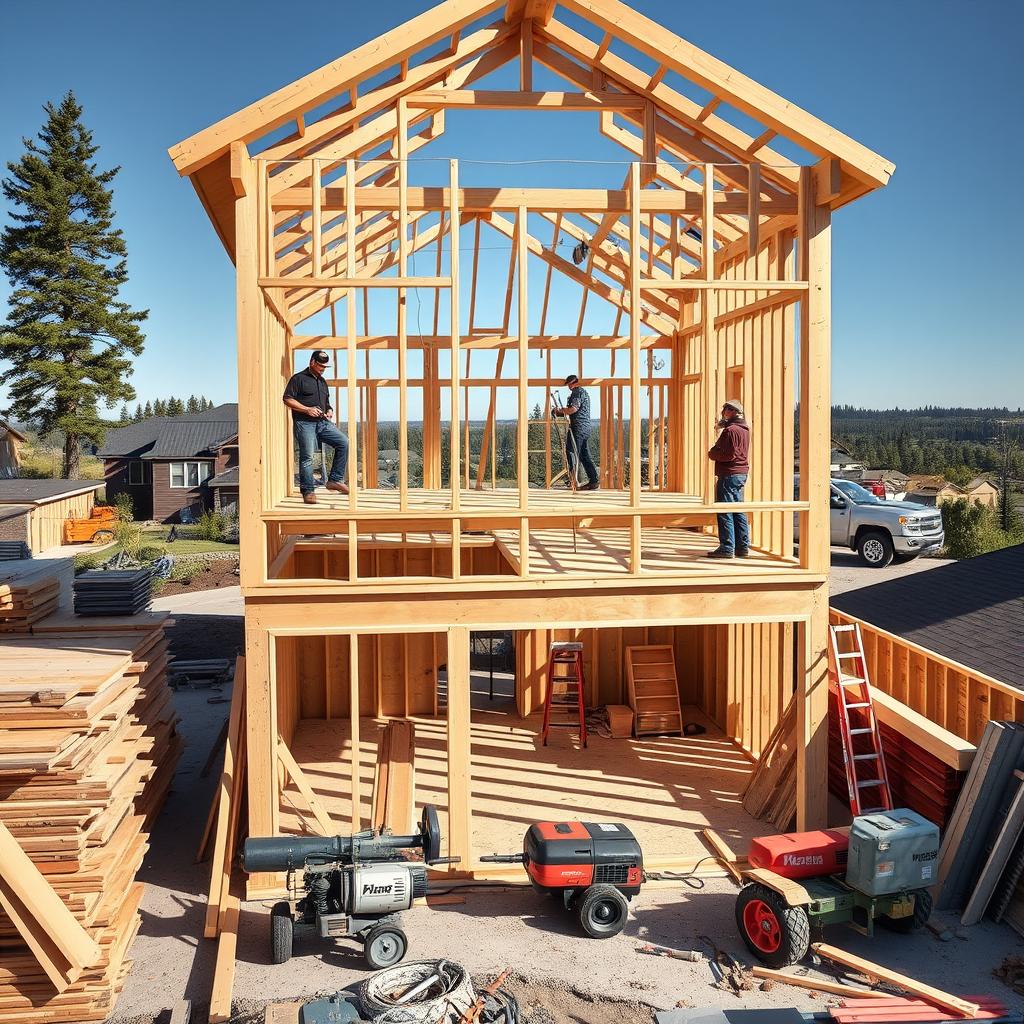
If you run a framing crew, "how much does insurance cost?" is usually the second question you ask — right after "will this actually cover me when something goes wrong?" This guide answers both, with real price ranges for 2026 and the factors that decide whether you land at the low end or the high end of them.
The short answer
Most residential framing contractors pay somewhere between $1,500 and $4,500 a year for a $1M per-occurrence / $2M general-aggregate general liability policy. Workers' compensation is rated on top of that as a percentage of payroll. A full program — GL, workers' comp, builder's risk, a tools floater, and commercial auto — typically runs a small framing company $6,000 to $20,000 a year combined, depending heavily on crew size, revenue, and claims history.
Those are ranges, not quotes. The only way to know your number is to get one — which we can usually deliver in about 15 minutes.
What drives framing GL premium
General liability for framers is rated primarily on payroll and subcontractor cost (sometimes revenue). The biggest levers:
- Crew size and payroll. More people on the payroll means more exposure and more premium.
- Work height. Framing two- and three-story work and roof framing costs more to insure than single-story — and a cheap policy that excludes work over two stories isn't a bargain, it's a trap.
- Subcontracted work. Uninsured subs increase your exposure. Tracking certificates and requiring additional-insured status brings it down.
- Claims history. A clean loss record keeps you in standard markets at better rates.
- Location. Wind, wildfire, and named-storm zones add cost; so do some litigious jurisdictions.
Workers' comp is rated on payroll by class code
Wood framing and rough carpentry is most often coded under NCCI class 5403 (Carpentry), and premium is calculated as a rate per $100 of payroll. That rate is higher than office work — for good reason — but correct classification, a documented fall-protection program, and clean loss control meaningfully reduce it.
The single most expensive mistake we see is misclassification: framers lumped into a generic "construction" code that overcharges them, or miscoded 1099 workers that trigger an audit bill later. Get the codes right up front.
The other lines, quickly
- Builder's risk is priced as a percentage of the project value and protects the structure and materials during construction.
- Tools & equipment floaters are rated on the scheduled value of your gear — nail guns, saws, generators, compressors.
- Commercial auto is rated per vehicle and driver, factoring radius of operation.
- Umbrella is a fraction of your underlying liability cost and adds large limits cheaply.
How to pay less (legitimately)
You don't want less coverage — you want correctly priced coverage. Three reliable moves:
- Classify accurately. Correct 5403 coding and clean subcontractor records prevent overcharges and audit surprises.
- Document your safety program. Fall protection, tool safety, and jobsite security reduce both frequency and severity of claims — and underwriters reward it.
- Bundle and coordinate. A coordinated program with one broker closes gaps (so you're not double-paying for overlapping coverage) and unlocks package discounts.
Get a real number in 15 minutes
Ballpark ranges are useful, but they're no substitute for a quote built around your crew, your payroll, and your work. Tell us about your operation and we'll shop A-rated specialty trades markets and come back with real prices — usually in about 15 minutes, no obligation.
Ready? Get a free quote or call 844-967-5247.
Need this coverage for your crew?
Get a real quote in about 15 minutes — we shop A-rated specialty trades markets.